
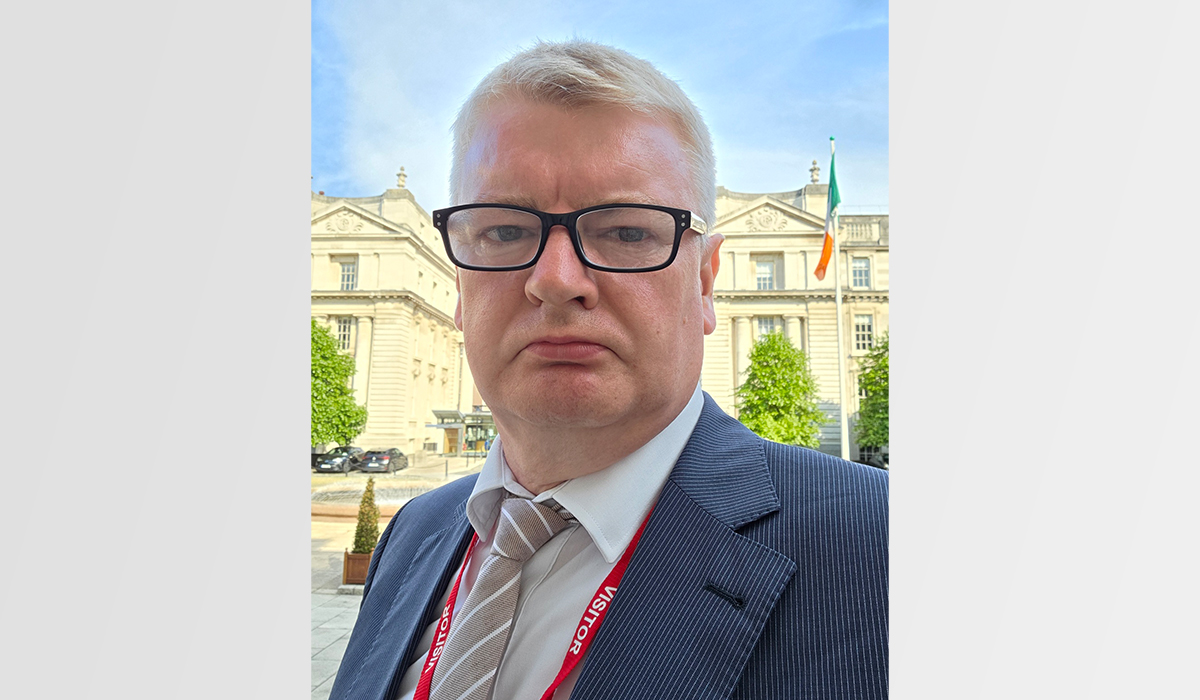
19 May Interview with Tim Conlon, Head of Policy and Strategic Planning Higher Education Authority (HEA)
Ireland’s tertiary sector punches above its weight globally, with all Irish universities appearingamong the world’s top 800 institutions in the QS World University Rankings for the first time in 2025.What factors have helped Ireland build one of Europe’s most respected higher education systems and where does the country distinguish itself from its regional and global peers?
One of Ireland’s key characteristics is its rapidly growing young population — one of the fastest-growing in Europe over recent decades — a trend expected to continue until around 2030. Alongside this, there is a strong cultural commitment to higher education among both young people and their parents. This reflects Ireland’s educational history. Many older generations did not have access to secondary, let alone higher, education. The introduction of free secondary education in the 1960s significantly expanded educational attainment and the next step was increasing participation in higher education.
Today, higher education is highly valued for both personal development and economic opportunity. Ireland’s participation rate is around 64%, among the highest in Europe and in the top tier of OECD countries. This is a major success, supporting a highly skilled economy that depends on well-educated graduates. At the same time, it creates a challenge: those without higher-level qualifications can be excluded from economic opportunities. Ensuring broad and equitable access to higher education is therefore a key priority. Higher education institutions are expected to respond to both social and economic needs, and one of their greatest strengths is their commitment to supporting Ireland’s national development.
What recent legislative and budget decisions do you believe will have the most positive impact on Ireland’s universities and what more needs to be done to lead to long-term competitiveness?
One of the most significant recent developments is the government’s investment in the INSPIRE program for research infrastructure. Having worked in higher education and research for nearly 30 years, I believe this investment is long overdue. While Ireland has benefited from major rounds of research infrastructure funding in the past, investment has not kept pace over the last 10–15 years. The INSPIRE program will help institutions develop the advanced facilities and technologies needed for world-class teaching and research. This investment will be transformative.
To prepare graduates for sectors such as food and drink, pharmaceuticals and medical technology, students need access to the latest equipment and learning environments. That ensures their skills are directly transferable to industry. The program is both timely and essential and it represents a major commitment by the government to strengthening Ireland’s higher education and innovation system.
Where do universities fit within Ireland’s Impact 2030 research ambitions and what is being done to position them as central engines of discovery and economic development?
Research has always been important in Ireland, but its focus has evolved significantly over the past 20 years. Traditionally, research was primarily about advancing knowledge and pushing the boundaries of disciplines such as chemistry and physics. While knowledge creation remains central, there is now a much stronger emphasis on applying research to real-world challenges.
One of Ireland’s greatest strengths is the close relationship between higher education institutions and industry — not only large companies, but also small and medium-sized enterprises and local businesses across the regions. This strong collaboration helps ensure that research generates economic and social impact. That is a core ambition of Impact 2030: not only to create knowledge within Irish higher education institutions, but also to ensure it is effectively transferred into society and the economy.
Established in 1971, the Higher Education Authority leads the strategic development of Ireland’s higher education and research system. Its current corporate strategy is built around four pillars: funding, development, regulation and advice. How would you describe the HEA’s role in Ireland’s education system and why is its work so important to the country’s long-term development?
The Higher Education Authority (HEA) was established under the 1971 Act and occupies a unique position within Ireland’s higher education system. We operate between government and higher education institutions, with two core responsibilities: funding and regulation. When those functions are working effectively, we can focus on our broader strategic role. This involves working with institutions on their contribution to regional and national development, advocating for higher education as a public good and supporting its role in economic and social progress.
We also lead initiatives in areas such as student wellbeing, mental health and the enhancement of teaching and learning. A key priority is ensuring that education remains research-informed, up to date and responsive to the needs of society and industry. Ultimately, the HEA plays an important enhancement role, working with institutions to strengthen higher education in the national interest and improve outcomes for Ireland as a whole.
How has the HEA evolved under its Corporate Strategic Plan 2023–2026 and what priorities are guiding preparations for its next strategy?
This was the first corporate strategic plan under the HEA Act 2022, which significantly expanded our powers and responsibilities. A key achievement has been embedding these new regulatory functions and strengthening our oversight of the higher education system. Looking ahead, two major areas will shape the future: artificial intelligence and environmental sustainability.
AI presents both opportunities and risks. While it can enhance learning and research, it also raises concerns about over-reliance, academic integrity and the ability of students to critically evaluate information. The challenge is to adapt assessment and teaching so that students use these tools effectively while still developing independent and creative thinking. Sustainability raises similar dual challenges. Institutions must reduce their environmental impact in daily operations, while also ensuring that graduates — across science, engineering and the humanities — are equipped to drive meaningful climate and sustainability solutions. In both areas, the goal is not only to develop skills and knowledge, but also to create the conditions for responsible, thoughtful use of these powerful tools and ideas.
How is the HEA working with industry and public agencies to embed lifelong learning, apprenticeships and flexible skills pathways into higher education? How strong is Ireland’s university-level entrepreneurship pipeline?
There is a strong culture within Irish higher education institutions of close engagement with enterprise, which is one of the key strengths of the system. It is common for businesses to easily connect with institutions to access expertise and support and this is actively encouraged. This is reflected in funding models such as HCI, which require strong industry partnership in program design. Nearly 90% of undergraduate courses now include a work placement, giving students direct industry experience. However, this also brings challenges, as some students take up employment opportunities before completing their studies. It is a balance that must be managed carefully.
Overall, enterprise engagement is central to higher education in Ireland. It shapes curriculum design, enhances graduate employability and is actively supported through targeted funding. Ultimately, education must ensure graduates are well prepared for the labor market and supported to access better opportunities.
What is Ireland’s tertiary sector doing to advance equality, diversity and inclusion, particularly across culture, gender and socio-economic background?
A major part of our work focuses on widening participation and supporting inclusion. With a participation rate of around 65%, increasing attention must be given to students at the margins, as exclusion from higher education can significantly limit social and economic mobility.
We therefore target specific groups to ensure they are supported into, through and out of higher education. This includes, for example, tailored support for students with disabilities, as accessibility — across campuses and learning environments — is essential for meaningful participation. As participation levels rise, student needs become more diverse, making inclusive design in both institutions and curricula increasingly important. Equality of opportunity and access remains a central priority across the system.
Digital transformation is reshaping how Irish institutions teach, operate and prepare students for the labor market. The HEA has also moved to guide the responsible use of new tools. How are digital tools changing the management of Irish institutions and the classroom experience, and what safeguards are being developed to ensure they are used responsibly?
There are three key dimensions to the use of technology in higher education. First, there is the environmental impact. As digital tools become more widely used, we must ensure that increased energy consumption does not undermine sustainability goals. Second, there is the issue of access and inclusion. Not all students, particularly those from disadvantaged backgrounds, have equal access to technology, so its use must not create new forms of exclusion. Third, there are implications for teaching, learning and assessment. While artificial intelligence can support learning, it also raises challenges around academic integrity and over-reliance. Clear guidance is essential, as misuse can have serious consequences for students.
Ireland has developed one of the first national strategies on AI in education, working across institutions to address these issues. This includes initiatives such as a ‘digital backpack’ to ensure students understand the opportunities and risks of technology use, alongside similar support in areas like sustainability. The aim is to enable innovation while ensuring responsible, inclusive and informed use across the system.
Initiatives like the digital backpack on responsible AI use are one example of a broader system-wide approach. A key challenge is keeping curricula aligned with rapidly changing industry needs. A four-year degree is designed today, but the knowledge and skills required may shift significantly by the time students graduate. To address this, institutions are developing more flexible curricula. While core disciplinary knowledge remains essential — for example, in chemistry — there is greater emphasis on adaptable components that can respond to change and emerging needs. The overall priority is continuous innovation, with institutions regularly reviewing how best to support students and prepare them for their future careers.
Ireland’s higher education sector remains strongly outward-looking. The sector saw record international student enrolments in 2025, led by students from India and the USA. What has driven Ireland’s success in attracting international students and why should U.S. students see Ireland as a compelling destination for higher education?
Ireland’s attractiveness as a higher education destination is driven by several factors. English as the main language is a major advantage, along with the scale and structure of the system. Irish institutions range from large universities with 60,000 students to smaller, close-knit communities of 4,000 students, offering a strong sense of belonging and a diverse mix of provision and expertise. There is space for a wide range of institutions and student experiences.
Quality is another key strength. Ireland is closely aligned with European quality assurance systems and places strong emphasis on protecting the reputation of its higher education brand and student experience. The country also has particular strengths in research and postgraduate education, especially in areas such as pharmaceuticals and ICT, making it an attractive location for academic and research careers. Combined with a safe and inclusive social environment, these factors contribute to Ireland’s overall appeal as a place to study and conduct research.
What level of collaboration is taking place between Irish and U.S. universities in research, education and social initiatives and how can these ties be strengthened for mutual benefit?
We can always do more. There is already a strong base of collaboration between Irish and U.S. higher education institutions, including longstanding partnerships and U.S. institutions with a presence in Ireland, such as Boston College at St. Stephen’s Green. There are also many active research collaborations. However, building deeper partnerships requires time and capacity, which can be challenging given financial pressures and heavy teaching loads in Irish higher education.
Despite this, where collaboration does happen, it highlights shared challenges across countries, particularly in areas such as student wellbeing and mental health. Supporting students’ sense of belonging and connection is a global issue, not just an Irish one. This is why we are working with U.S. partners on initiatives such as the healthy campus approach, which focuses on student wellbeing, social integration and civic engagement alongside academic success. The goal is to ensure students are supported not only in their studies, but in their wider development and sense of place in society.
What are your top priorities as Head of Policy and Strategic Planning and what is your vision for Ireland’s higher education system over the next five to ten years?
The only certainty in higher education is uncertainty; we rarely know exactly what comes next. That is why the agility of institutions must continue to be supported. This requires appropriate structures and funding, but also enough autonomy for institutions to take risks, innovate and adapt. Without that flexibility, systems quickly fall behind. Alongside traditional three- and four-year degrees, there is a growing need for more flexible forms of provision.
This is particularly important in areas like ICT, where rapid change — especially driven by artificial intelligence — will require ongoing reskilling and upskilling. Higher education will need to expand beyond traditional programs and offer more accessible, flexible learning opportunities to a wider range of learners throughout their careers.
IR: What is your final message to LA Times readers?
We share many of the same concerns as your audience, particularly around the environment, inclusion and belonging. Ireland’s higher education and research system offers a useful example of how collaboration can break down barriers — whether in widening student participation or strengthening links between institutions, enterprise, regions and government. Public and social responsibility is central to the system.
Because higher education is largely state-funded, there is a clear expectation that institutions contribute to society beyond formal teaching and research. This includes broader public engagement and knowledge exchange, using the expertise within higher education to support communities and deliver wider social benefit.
No Comments