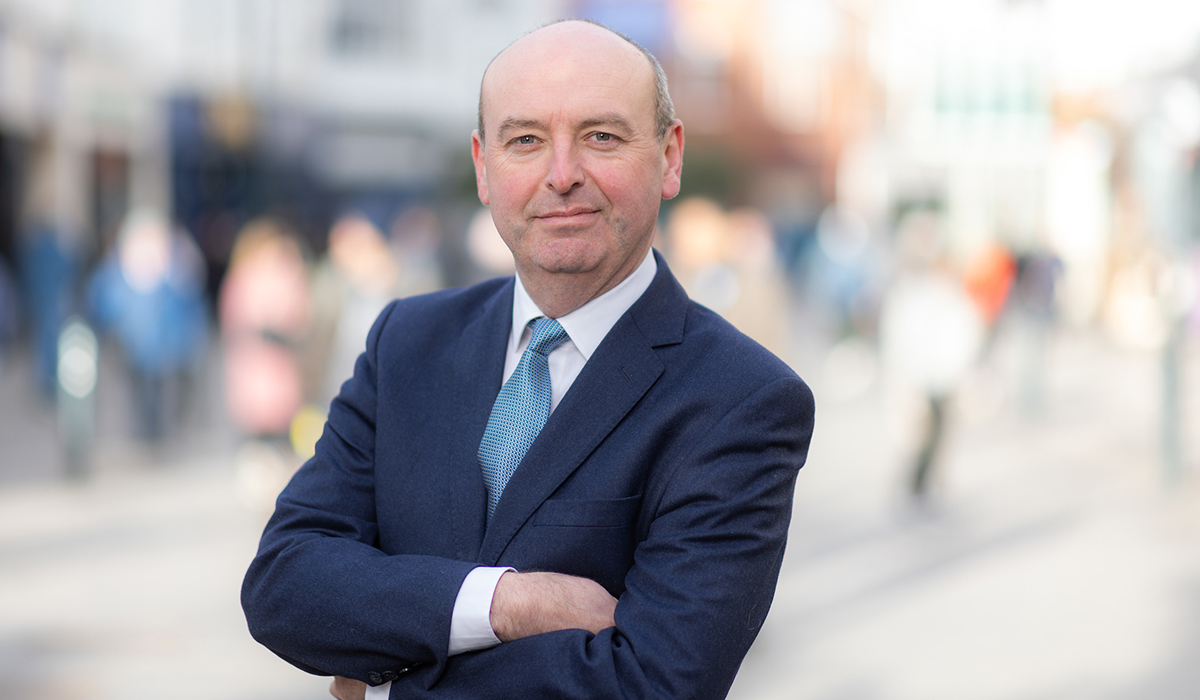
13 Jun Interview with Fergal O’Brien, Executive Director, Policy, Lobbying & Influence, IBEC
Ireland has recorded remarkable economic growth over the past decade, with GDP expanding by almost 5% in 2025. How has Ireland’s economic success translated into a stronger business environment, and why does the country stand out as an attractive base within the EU?
The last decade has been a remarkable period for the Irish economy. When I was studying economics, just over one million people were employed in Ireland. Today, that figure is close to three million. Following the rapid growth of the Celtic Tiger years and the challenges of the financial crisis, the past 10 years have delivered the strongest job growth in Irish economic history. No developed economy has matched Ireland’s pace of job creation and business expansion over this period. We have seen not only more jobs, but higher-quality jobs and stronger business activity across the economy.
Ireland has also experienced a manufacturing renaissance. Despite being a high-cost economy, we have built strength in high-value sectors such as biopharmaceuticals, medical devices, engineering and food, supported by opportunities in the EU single market and global exports. At the same time, our services sector has continued to grow strongly. Since the financial crisis, domestic demand has become a key driver of Ireland’s growth. Irish households are now among the wealthiest in the world and the benefits of that prosperity are being felt across the economy.
A major development of the past decade is the government’s increased capacity to invest in infrastructure and the transition to a low-carbon economy. Rapid employment growth, from around two million to nearly three million people, has significantly increased demand for housing, public transport, energy, water and other essential infrastructure. We are now entering a period of transformation, with the state investing to match the scale of private-sector growth. The focus for the years ahead will be on delivering the infrastructure needed to support Ireland’s continued economic and population growth.
What bottlenecks still need to be addressed to improve the ease of doing business, and how responsive has the government been to business needs?
The biggest challenge for Ireland over the past decade has been managing the pressures created by rapid economic and population growth. Housing has been a particular issue, as it has across many developed economies, but Ireland’s strong growth has made the challenge especially acute. Encouragingly, we are now seeing significant measures to address these constraints. In areas such as energy and environmental infrastructure, Ireland is still playing catch-up. However, an ambitious National Development Plan, supported by both public and private investment, will deliver major infrastructure projects over the next decade. This will be a transformative period for Ireland, modernizing not only the business environment and quality of jobs, but also the country’s physical infrastructure. Ireland is set to undertake one of the most ambitious public investment programs in the world.
IBEC recently co-hosted a business roundtable with the European Commission Representation, which covered the Single Market Strategy and One Europe, One Market roadmap. What priorities need to be addressed at the E.U. level as Ireland prepares to assume the Presidency of the Council of the European Union?
It is an exciting time for Ireland as it takes on the presidency at a crucial moment for Europe. The geopolitical environment has changed significantly in recent years, particularly around trade and global supply chains and this is shaping the European policy agenda. For Irish businesses, resilience and security are now top priorities, especially in relation to supply chains, critical infrastructure and cybersecurity. These priorities are increasingly reflected at a European level.
At the same time, the rapid development of artificial intelligence is transforming how businesses operate across Europe. The presidency will be an important opportunity to help shape a regulatory approach that both protects citizens and businesses while ensuring Europe can remain agile and fully benefit from the opportunities AI presents. Europe’s social model can be a real competitive advantage as we navigate disruption in labor markets and wider economic change. With its strong safety net and emphasis on upskilling and investment in people, Europe — and Ireland in particular, given the funds available — has an opportunity to support workers through this transition.
For business, key priorities include completing the Single Market, improving the regulatory environment and strengthening Europe’s ability to compete in areas such as AI and digital innovation, where Ireland is already a leader. Maintaining openness to trade and investment is also essential, especially for an economy that has benefited significantly from globalization and multilateralism. Going forward, Europe needs to remain competitive and open while preserving social solidarity. At the same time, there is a growing focus on resilience, including economic security and defense. Over the coming months, important EU legislation will be shaped in this context and Ireland will play a key role in helping to drive that agenda.
Ireland is continuing to diversify beyond traditional strengths such as financial services and agrifood into technology, life sciences and sustainability-led industries. The country has also emerged as a major European base for global technology firms, with companies such as Anthropic recently expanding operations in Ireland. What has helped Ireland attract such a strong concentration of technology companies and which firms now stand out as its most exciting growth stories?
Talent has been the key driver of Ireland’s attractiveness over the past decade. Alongside access to E.U. talent, Ireland has pursued progressive immigration policies to attract skilled workers from outside the E.U. As a result, the workforce has been transformed from being largely Irish-born 15–20 years ago to almost one third of employees now being born outside Ireland. This has significantly expanded the talent base available to business and society.
This ability to attract and retain global talent has been central to Ireland’s success, particularly in innovation, technology and R&D. Strong and improving support for research and development have reinforced this and companies increasingly see Ireland as a world-class location for building and scaling R&D teams.
We see this across all sectors of the Irish economy. Indigenous companies are investing in world-class R&D and using AI to improve customer experience and product development. This is also evident in food, medical technology, pharmaceuticals, technology and financial services, all of which are expanding their innovation and research activity. A key strength of the Irish economy has been its broad, cross-sector growth model, rather than reliance on any single industry. Horizontal supports — particularly for talent, R&D and innovation — have been central to strengthening firms and improving the overall business environment in Ireland.
What momentum is building around the transition to net zero and why is Ireland a compelling base for sustainable technology companies?
While corporate emphasis on ESG has evolved in recent years, companies have not stepped back from decarbonization strategies. In fact, momentum remains strong. The global energy crisis has reinforced the need for both competitiveness and energy security, as well as greater energy sovereignty. For Ireland, this presents a major opportunity, particularly in offshore wind, where delivery is now accelerating following significant reforms to planning and infrastructure systems. Investor interest in renewable energy remains strong, and businesses are increasingly focused on demonstrating progress on decarbonization to customers and supply chains, supported by Ireland’s strong green reputation. Rather than a slowdown, we are seeing a renewed focus on the infrastructure needed to enable the transition, with energy security and decarbonization now higher priorities for Irish business.
Ireland’s National Development Plan places a strong emphasis on skills development, entrepreneurship and regional enterprise. How supportive is Ireland’s business environment for startups and SMEs and what makes the country a strong platform for entrepreneurs?
Training and talent are central to supporting businesses of all sizes in Ireland. Employers contribute 1% of payroll to a National Training Fund, which — driven by strong employment growth — now has a surplus of around $2.3 billion. This creates a major opportunity to invest more directly in skills development. Ireland already has strong structures in place, including enterprise-led training networks, apprenticeships and lifelong learning support through initiatives such as Skillnet.
Despite some global signs of labor market cooling, Irish employers continue to report significant skills shortages, driven by increasing specialization across sectors such as advanced manufacturing, research and technology. The rise of AI further increases the need for upskilling and reskilling. Ireland is well placed to support startups, scale-ups and established firms in this transition, backed by a strong venture capital ecosystem and state support. Alongside a strong multinational base, there is also growing momentum in indigenous startups and scale-ups, with many scaling into export markets faster than before.
What talent challenges are businesses facing today and how are organizations such as Ibec supporting education, training and skills development?
Talent challenges for business have never been greater, as rapid technological change and AI are transforming business models at unprecedented speed. While companies are optimistic about these opportunities, they are increasingly aware that the main constraint is not access to technology, but access to skills and the ability to upskill and adapt their workforce.
Ireland is well placed to respond, with significant resources in the National Training Fund and strong supportfor lifelong learning and upskilling by international standards. In recent years, there has also been a major expansion of apprenticeships beyond traditional construction roles into areas such as technology, financial services, engineering, manufacturing and sustainability. This is helping businesses to actively shape future talent pipelines and better prepare for a rapidly changing global economy.
According to Ireland’s Central Statistics Office, goods exports to the United States rose by 34% to 72.6 billion euros in 2024. Despite ongoing tariff negotiations, the U.S. remains Ireland’s largest export market, led by medical and pharmaceutical products. What are Ireland’s most important and iconic exports in 2026 and how has the volatile global environment changed the outlook for these sectors?
Despite recent global trade disruption, Ireland’s trading relationship with the United States remains exceptionally strong. It is a distinctive partnership, with many Irish-based companies embedded in U.S. industrial supply chains. Much of Ireland’s export value reflects U.S. firms operating in Ireland and supplying inputs back into those supply chains, particularly in pharmaceuticals, medical technology and increasingly technology services.
Ireland also serves as a key European base for many U.S. companies. The relationship is two-way. Irish-owned firms are significant employers in the U.S., particularly in sectors such as building materials, food and technology. At the same time, the U.S. remains a vital export market for Irish companies, especially in food, drink and consumer brands. Overall, it is a deeply integrated economic partnership built on shared supply chains, investment and trade.
What is being done to strengthen opportunities for Irish exporters in the USA and in particular to California?
The Irish–U.S. economic relationship is evolving. Alongside traditional trade in Irish branded goods and established supply chain links, we are now seeing a new generation of Irish entrepreneurs — particularly in medtech, biopharma, technology and financial services — engaging with the U.S. market much earlier in their growth journey. In some cases, the U.S. is now the first major international market for Irish firms. Opportunities, especially on the U.S. West Coast and in Silicon Valley, are particularly strong, with Irish companies increasingly securing scale-up funding and establishing operations in states like California. Cultural and language alignment, combined with a highly supportive business environment, continues to make the U.S. an especially attractive destination for Irish companies looking to expand globally.
Foreign direct investment remains central to Ireland’s economic strategy, with major US companies such as Apple, Microsoft, Meta and Google playing significant roles in the economy. What incentives and structural advantages are available to foreign companies and how do you expect the investment landscape to evolve?
The key attraction for inward investment into Ireland is policy stability — economic, political and social — which Ireland has delivered consistently for decades. This includes a clear and predictable tax regime, strong incentives for research and development and support for upskilling and workforce development. Ireland also ranks highly for ease of doing business. While we continue to improve our investment offering, this long-standing stability remains our core strength.
The key investment opportunity in Ireland remains its access to the European market. As the only native English-speaking country within the E.U., Ireland provides a valuable bridge for international, particularly U.S., companies entering Europe. While the domestic market is relatively small, it is growing quickly, supported by strong population growth. Ireland is also entering a significant investment phase, with major opportunities in infrastructure, energy and innovation that are among the strongest globally on a per-capita basis.
This combination of EU market access, a growing economy and a strong innovation environment makes Ireland an attractive location for inward investment, market testing and scaling businesses for European and global markets.
Looking ahead, the focus is on strengthening critical infrastructure — particularly in energy, environment and transport — to ensure Ireland remains a highly competitive and attractive location for global investment.
IBEC is Ireland’s largest lobby and business representative group, representing more than 7,500 businesses from SMEs to major multinationals. Can you introduce Ibec to readers of L.A. Times and explain its role in future-proofing Irish business?
IBEC represents the interests of businesses across the Irish economy, spanning 39 sectors and trade associations. These range from indigenous food and drink and retail to multinational-led industries such as biopharma, technology, medical devices and financial services. We engage deeply on regulatory and labor market issues and represent employers nationally and internationally. Through BusinessEurope and engagement with organizations such as the OECD and the International Labour Organization, as well as strong links with the U.S. Chamber of Commerce and other partners, we ensure Irish business interests are represented globally. Our goal is to create the best possible business environment in Ireland to support economic growth, employment and wider societal prosperity.
What are your top priorities as executive director of policy and lobbying, what’s top on your agenda and what is your vision for IBEC over the next five to ten years?
Ireland is now a wealthy and prosperous economy and delivering the physical infrastructure to match that success is a key priority. Our role in the world is increasingly important, including through Ireland’s presidency of the E.U., which is an opportunity to advocate for an open, competitive Europe that supports growth and opportunity for European and international business. We also want Ireland to remain clearly positioned as an open, progressive economy for both investment and talent. Much of our recent success has been driven by attracting global talent and it is essential that we continue to build on that openness and commitment to multilateral engagement.
The period ahead is an exciting one for the Irish economy. We have seen significant business transformation over the past decade and this momentum will continue. The rise of AI offers major opportunities, particularly given Ireland’s adaptable business environment and strong talent base. Ireland is also well placed to help shape Europe’s competitiveness as an attractive destination for investment and exports. Overall, the outlook is positive and we will continue to support policies that drive growth and prosperity for both domestic and international business.
No Comments