
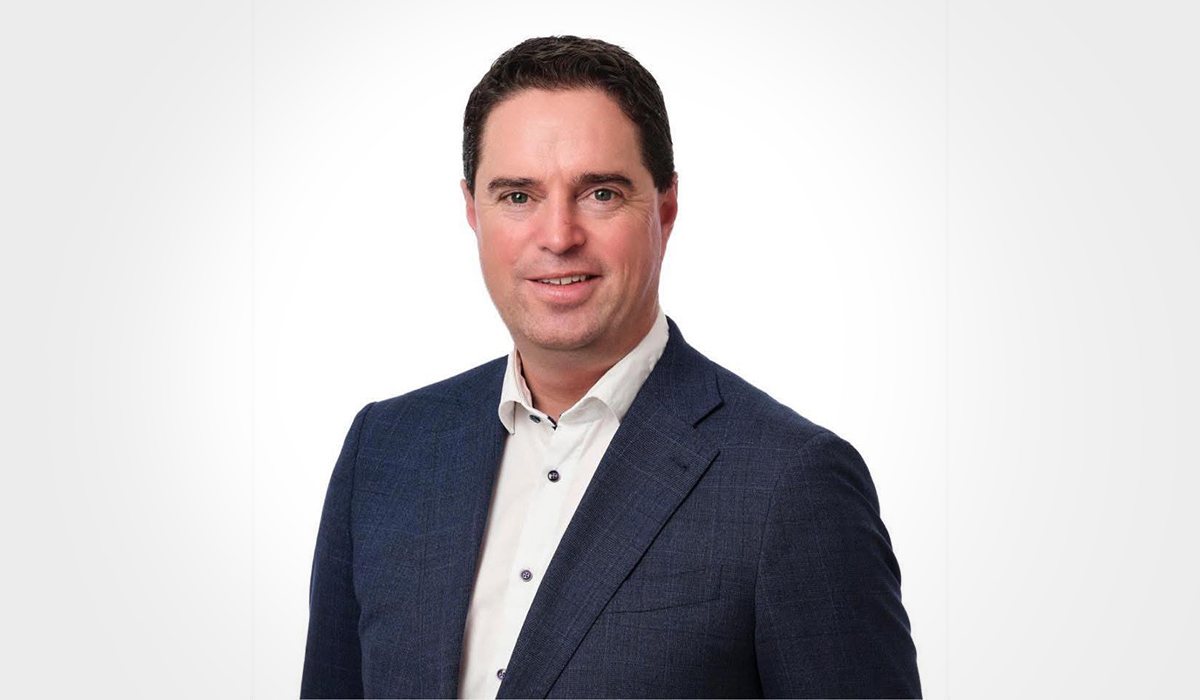
14 Jun Interview with Minister for Agriculture, Food and the Marine, Martin Heydon
Ireland’s agrifood sector remains one of the country’s most internationally recognized industries, producing globally renowned products such as beef, dairy, salmon and iconic beverages like Irish whiskey. According to Bord Bia, the value of Irish food, drink and horticulture exports rose by 12% in 2025. For readers of the L.A. Times, what makes Ireland’s agrifood industry so distinctive in Europe and globally, and which products have become its strongest calling cards in international markets?
The agrifood sector is a key driver of economic growth in rural Ireland and plays a major role in our global exports. It spans farming, fishing, forestry and the processing of food, beverages and wood products.
Irish agrifood exports — including beef, butter, cheese and whiskey — continue to perform strongly, reflecting the work of 133,000 farms, 2,000 fishing vessels, aquaculture sites and more than 2,400 food and drink businesses. The sector supports around 171,000 jobs directly, and many more indirectly, especially in rural and coastal communities.
Around 300,000 people work on Irish farms, in both full-time and part-time roles. However, it is operating in a challenging global environment, with geopolitical uncertainty, market volatility and rising energy and input costs, particularly for fuel and fertilizer.
The government continues to support family farms through the Common Agricultural Policy (CAP) Strategic Plan, which will deliver $11.4 billion to Irish farm families up to 2027, alongside ongoing engagement with farmers and support for the wider agrifood industry.
You recently unveiled a $116 million fuel support program for farmers. What additional measures has the government introduced to help producers navigate rising costs and other macroeconomic pressures?
Our CAP Strategic Plan is a key support for Irish farmers, delivering nearly $11.5 billion to help them produce food more sustainably. It includes schemes such as the Targeted Agricultural Modernization Scheme, which helps farmers invest in modern technology and on-farm improvements to boost sustainability.
Ireland’s pasture-based system also supports low-impact, high-quality food production. We continue to invest in better equipment and practices to reduce emissions, improve water quality and enhance biodiversity, while maintaining safe, nutritious food for domestic and export markets. As Ireland exports around 90% of its food and drink, maintaining our strong global reputation for high-quality, trusted products is essential.
Can you outline the goals of the new Plant Health and Biosecurity Strategy 2030? Why are initiatives like this so important to protecting Ireland’s farmers and long-term food security?
Ireland’s Food Vision 2030 is a stakeholder-led, 10-year strategy placing sustainability at the heart of our food system. It brings together farmers, processors and food and drink companies around a shared goal of making Ireland a global leader in safe, sustainable food production. The strategy is built around four missions: climate action, resilient primary production, high-quality trusted food and a competitive, innovation-driven agrifood sector.
This commitment is delivered in practice through Origin Green, Ireland’s national sustainability program. It enables over 61,000 farms and more than 350 food and drink companies to set and achieve measurable sustainability targets. Verified members account for around 90% of Ireland’s food and drink exports, supported by standards, tools and continuous improvement across the sector.
Ireland’s marine sector is a strategic pillar of the economy, supported by sovereign rights over one of Europe’s largest maritime areas and a sea-to-land ratio of 10 to 1. According to the Marine Institute’s latest Ireland’s Ocean Economy Report, the country’s ocean economy generates nearly $9.8 billion in annual turnover across seafood, tourism, renewable energy and marine technology. Why does Ireland’s marine sector represent such a critical pillar of the national economy? How prominently does it feature within the National Development Plan?
As an island nation, Ireland’s seafood sector is vital to our rural, coastal and island communities, as well as to our export economy. Our seas provide a rich source of sustainable seafood, supporting fishing communities and helping maintain balanced regional development across the country. The sector is relatively small in GDP terms, but highly valuable, with seafood exports worth around $882 million in 2025. The total value of all Ireland’s exports was $301 billion.
The seafood economy is estimated to be worth $1.45 billion in the Business of Seafood report published by BIM, which is a semi-state body in Ireland. Beyond the numbers, it plays a key social and economic role in coastal areas and reflects Ireland’s reputation for high-quality, sustainably produced food exported worldwide.
Ireland is placing innovation and talent at the center of its next growth phase. The 2026 budget allocates $140 million to support high-potential Irish companies, while $15.2 billion has been directed toward education and skills development. Which initiatives are proving most effective in supporting SMEs and entrepreneurship across these sectors, and which standout companies best showcase Irish ingenuity?
Having led several trade missions, I have seen first-hand the global respect for Irish food and drink. This success is built on the combined work of farmers, industry and the research community. Investment in research drives innovation and helps Ireland remain competitive in global markets, while also supporting better policy in areas such as biodiversity, water quality and greenhouse gas emissions.
Since 2010, my department has invested over $290 million in agricultural research and innovation. Together with agencies like Teagasc and the Marine Institute, it is one of the largest public research funders in the country. Last year alone, over $35 million was allocated to 41 projects across agriculture, food, forestry and the bioeconomy.
I was also pleased to announce $43.6 million in new funding for 30 projects under the 2025 research call. This investment helps place Ireland among the top countries globally for research quality — 12th overall, and 3rd in agricultural, animal and dairy science.
Research and innovation are essential to a sustainable and resilient agrifood, forestry and bioeconomy sector. Continued investment is key to future-proofing primary producers and developing the technologies that will keep Ireland competitive as a leading food-producing nation.
Digital transformation is becoming increasingly important across Ireland’s productive sectors, from precision agriculture and fisheries management to public-sector support systems. Ireland has also developed a growing agritech cluster, with innovative companies such as Agricom, CropSafe and Dairy Robotics gaining international attention. How is Ireland distinguishing itself both in the adoption of digital tools across the food value chain and in the creation of home-grown agritech technologies now being exported worldwide?
Ireland’s agrifood sector is embracing the agritech revolution. My department is taking a digital-first approach, with a goal of digitizing 90% of customer processes by 2030. Digital services now support applications for E.U. and national schemes, while farmers can manage animal registrations, herd data and disease status online, improving transparency and traceability.
Fishers also use digital systems for vessel details, licensing and capacity management. In forestry, spatial tools have replaced manual assessments, enabling real-time analysis using over a million data points. We are also advancing data, digital and artificial intelligence (AI) strategies to build a more skilled workforce and improve efficiency, including automated compliance checks.
AI will be used ethically and to support, not replace, decision-making. Alongside this, Ireland’s agritech sector continues to grow, with innovative companies developing new technologies that support modern, sustainable food production.
Ireland is pursuing ambitious emissions reductions through its Climate Action Plans and a wide range of environmental initiatives. Producers across the food sector are increasingly adopting traceability systems, carbon reduction programs and regenerative practices. How is Ireland’s drive to reduce emissions reshaping the agriculture and marine sectors? Beyond emissions, how is Ireland protecting biodiversity and using programs such as Origin Green to reinforce its global reputation for sustainable production?
Origin Green provides verified, independently assured proof of sustainability across Ireland’s entire agrifood chain — from farmers and fishers to processors and food companies. As the only national program of its kind covering the full supply chain, it builds trust and confidence with international customers.
Food Vision 2030 underpins this approach, with a goal of a climate-neutral food system by 2050 and clear targets for 2030. Its climate-smart mission focuses on reducing emissions, improving water and air quality, enhancing biodiversity, expanding sustainable forestry and seafood, and strengthening the bioeconomy and Origin Green.
The bioeconomy is a major opportunity, turning by-products into high-value resources — for example, whey proteins that were once a by-product are now a valuable source of income for farmers. Ireland will also host a major E.U. bioeconomy conference in Dublin this October, highlighting its growing importance.
The country’s food, drink, and horticulture exports reached $22.1 billion in 2025, the strongest performance in the sector’s history. How important is the U.S. as a market for Irish food products, from Guinness to organic salmon, and what is being done to deepen transatlantic trade and business partnerships?
Trade with the U.S. is vital for Ireland, underpinned by deep historical, cultural and people-to-people links, including a large Irish diaspora. It is also a strong two-way economic relationship. In 2025, the U.S. was Ireland’s third-largest market for agrifood exports, worth $2.2 billion (about 9% of total exports) Exports to the U.S. were led by dairy at about $1 billion, followed by beverages at around $970 million.
At the same time, around 900 U.S. companies are based in Ireland, while Irish firms are a major investor in the U.S. — now the fifth-largest source of foreign direct investment, supporting over 200,000 jobs across all 50 states. As of 2024, Irish-origin investments in the U.S. reached a record $388 billion, reflecting a strong two-way economic partnership between Ireland and the U.S.
What investment opportunities in Ireland’s agriculture and marine sectors are likely to be most attractive to U.S. and other international investors? Why is now the ideal time to invest?
Ireland is open to investment, and many U.S. companies choose to base operations here for good reason. As the only English-speaking E.U. member state, Ireland provides direct access to the E.U. Single Market of around 450 million people, with frictionless trade across member states.
This makes Ireland an attractive location for investment across sectors including agrifood, pharma and tech. For U.S. companies, it is a strategic gateway to Europe and a mutually beneficial partnership.
You became Minister for Agriculture, Food and the Marine in January 2025 after a long career in public service. Throughout your career, you have been a strong advocate for rural communities and Irish farmers that underpin the country’s food and export success. What are your top priorities and what long-term vision do you have for the role these vital sectors will play in Ireland’s economic and social future?
Irish agriculture and food production is our oldest indigenous industry and remains a key driver of balanced regional development and rural vitality. Supporting our 133,000 farm families and strengthening farm incomes is a core priority.
From July 1, Ireland will hold the E.U. Presidency, and I will chair the Agriculture and Fisheries Council during negotiations on the post-2027 CA). My priorities include securing a CAP that supports food security, fair and stable farm incomes, and resilient rural communities, as well as concluding annual fisheries negotiations. We will also focus on implementing the European Commission’s vision for agriculture, including generational renewal and sustainable livestock systems.
What is your final message to L.A .Times readers?
The long-standing trade relationship between Ireland and the U.S. is mutually beneficial and built on strong people-to-people ties, including the Irish diaspora. Ireland is also a significant investor in the U.S., with Irish companies employing around 200,000 people there.
At the same time, American consumers continue to enjoy Irish products such as butter and whiskey, while Irish consumers value many U.S. goods. It is a two-way relationship we value deeply and expect to continue strengthening in the years ahead.
No Comments