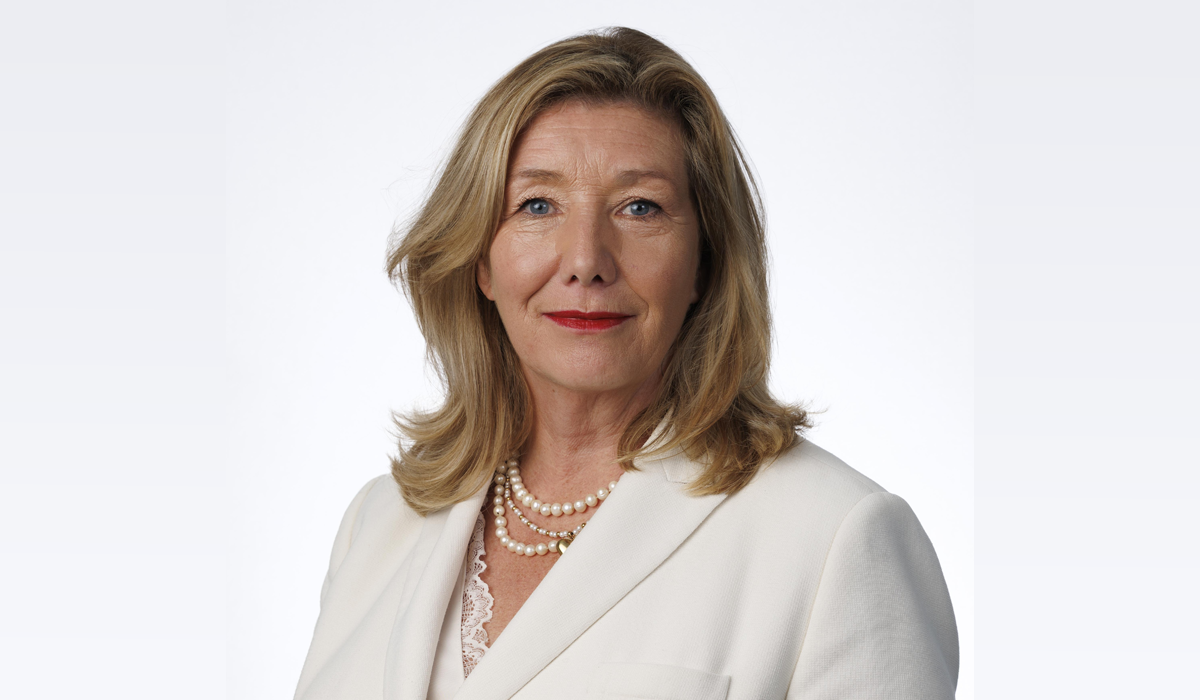
12 Jun Interview with Mary Rose Burke, CEO Dublin Chamber of Commerce
Dublin has become one of Europe’s most compelling business hubs, combining a competitive tax regime, a young and educated workforce, and direct access to the EU market. What makes Dublin such a distinctive place to live and work and how does the city stand out as a launchpad for international events
Dublin Chamber has represented businesses across the greater Dublin area since 1783. Over the centuries, the business community has evolved from a major shipping hub to a modern, globally connected knowledge economy. Connectivity — moving goods, services and people — has always been central to Dublin’s growth.
In recent decades, Ireland’s development has been driven by an outward-looking, international approach. After missing the first Industrial Revolution and remaining largely agrarian until the 1950s, Ireland focused on becoming an open global trading economy. Dublin has benefited enormously from global trade and foreign direct investment, particularly from the U.S., supported by government policy and the Industrial Development Agency. That investment has transformed the city, strengthening education, creating employment and attracting ambitious international talent. Dublin has evolved from a place where people came for part of their careers to a city where global leadership and CEO-level roles are now based. This has brought innovation, resilience, optimism and a strong sense of possibility to the business community.
One of the key drivers of Dublin’s success has been a consistently pro-business environment across successive governments. While administrations have changed over the decades, there has been broad political recognition that a strong business sector drives economic and social progress. The growth of major international tech companies in the 1990s and early 2000s also accelerated social change, particularly around diversity and inclusion. These companies helped broaden participation in the workforce, especially for women, and strengthened Ireland’s ability to attract and retain global talent. Today, diversity and inclusion are no longer viewed as separate initiatives — they are simply part of how modern business operates. Supported by both Irish and EU legislation, this framework gives confidence that Ireland can continue to benefit from the full talent and potential of its society.
How is Ireland’s diversification push reflected in Dublin’s business community and what industries now carry the greatest weight in the city’s growth story?
Our membership reflects the diversity of Dublin’s economy. Alongside globally recognized brands, we still have a strong maker economy, with food and beverage remaining an important sector. At the same time, professional services, banking, international finance and regional headquarters operations have grown significantly.
Ireland’s economy is now broadly balanced between products and services and Dublin’s global connectivity through its airport and port has been a major advantage. That connectivity, supported by critical infrastructure, has helped drive rapid economic and population growth. While that growth has placed pressure on infrastructure, investment is catching up and that will be key to supporting the next phase of Dublin’s development.
Ireland’s Impact 2030 strategy aims to raise R&D investment to at least 2.5% of the domestic economy by 2030. Where does Dublin hold its strongest research advantages, which new R&D centers have opened in recent years and how is fresh funding expected to expand this base?
Ireland has a strong ecosystem of agencies supporting R&D, which is essential to sustaining foreign direct investment and building a stronger indigenous business base. Large companies tend to have more structured, long-term approaches to R&D and innovation, while smaller businesses often need greater support, especially in areas like AI, process redesign and developing new markets and services. That requires both skills development and upfront, rather than retrospective, R&D support to help with cash flow.
Alongside a well-educated population and growing investor base — including family offices and angel investors — this creates real momentum for innovation. However, government policy remains critical. We continue to advocate for stronger incentives for investment in innovation, including tax policy and capital gains reform, to ensure the ecosystem can scale effectively.
In your opinion, which government measures have been most effective in addressing the pressures facing businesses today and how do these interventions reflect Dublin’s agile commercial environment?
Our biggest challenge is infrastructure — energy, water, wastewater and the grid. These are areas only government can deliver and they are essential for business growth, with the private sector building on that foundation. There is strong dialogue between business and government and we work closely with policymakers to help shape practical, long-term solutions. However, delivery has lagged in recent years, partly due to regulatory delays, and we have been pushing for faster progress.
We are now entering a period of major infrastructure investment, including several large-scale projects that signal real ambition. This is an important shift, as it provides the long-term certainty needed to attract investment over the next 10 to 30 years. Crucially, Ireland is in a strong position: there is both political ambition and the financial capacity to deliver. That alignment is rare and it gives confidence that we are finally building the foundations for sustained growth.
American firms remain central to Ireland’s FDI success, with major investors such as Apple, Microsoft, Meta and Google among nearly 1,000 U.S.-owned companies nationwide. How significant are U.S. companies within Dublin’s business landscape and which recent entrants or expansions best illustrate the strength of this transatlantic relationship?
Ireland has benefited from long-term investment from companies such as Intel, as well as the growth of pharma and emerging MedTech, particularly in regions like Galway, with strong links to Dublin through subsidiary operations. This has built a deep ecosystem of professional services, engineering and technical expertise. That expertise now feeds back into global markets, with Irish firms active internationally, including in major infrastructure and data center projects in the U.S.
This reflects the maturity of Ireland’s foreign direct investment model, supported by stability, talent, tax and a strong legal system. Each wave of investment — from pharma and semiconductors to social media and big tech — has strengthened the next. We are now seeing early momentum in AI, with high-value research and jobs being created across multiple companies. A strong partnership between industry, universities and the education system is helping to support this, although there is always pressure to move faster.
Alongside AI skills, there is also urgent demand for infrastructure skills, particularly civil engineering, to deliver Ireland’s next phase of growth. Overall, it is a complex but highly dynamic and fast-moving economy.
How does Dublin Chamber help strengthen transatlantic trade and investment and what recent activities have helped deepen ties between Ireland and the USA?
Connectivity is a key driver of investment, as executives need easy access when making location decisions. We continue to advocate for stronger international connectivity, including lifting the Dublin Airport passenger cap as soon as possible to support future routes and planning cycles. As an island nation, direct air links are essential. When new routes to the U.S. are introduced, we work closely with chambers of commerce in those regions, because business travel is what sustains them. We also use cultural and sporting links — such as NFL and college football games — as opportunities to build relationships with cities and states like Dallas–Fort Worth and North Carolina.
Dublin’s international partnerships, including its twinning with San Jose, help strengthen these ties. Alongside this, we regularly lead and host trade delegations, particularly around St. Patrick’s Day in Washington DC, often extending visits to other cities. This ongoing exchange builds long-term relationships between businesses, chambers and policymakers on both sides.
Which local investment opportunities do you see as most attractive to foreign investors in 2026, and why is now the right time to invest?
Investor confidence is central to continued growth. Companies invest here because of a proven track record of success, where firms tend not only to stay but to expand, deepening their capital investment and R&D over time. There is awareness that infrastructure constraints could limit future investment, which is why businesses actively engage through the Chamber to highlight the link between infrastructure, jobs and long-term growth. This engagement also helps ensure government accountability and delivery on commitments.
Foreign direct investment companies are strong corporate citizens and play an active role in this ecosystem, creating a virtuous circle that attracts further investment. Ireland’s open, globally connected workforce and strong professional services base also make it easy for new companies to establish themselves, reducing friction and supporting continued investment.
How strong is Dublin’s support environment for startups and SMEs and which emerging local companies should investors be watching closely in the coming years?
Ireland has a highly dynamic startup and early-stage scaling ecosystem, arguably second only to Silicon Valley. It is driven by a strong educational base and a culture of global ambition, where entrepreneurs are focused on testing locally but scaling internationally from the outset.
This ecosystem is supported by agencies such as Enterprise Ireland, Local Enterprise Offices and programs like the Enterprise Europe Network, which helps SMEs access markets across 60 countries. Together, these networks provide access to expertise, partners and market insights. The main historical gap has been later-stage funding, particularly in the €3–5 million range. That is now improving, with growing angel investment, family office participation and a stronger high-net-worth investor base. This is helping more companies scale rather than exit too early.
To sustain this momentum, further policy reform is needed, particularly around capital gains tax and incentives for early-stage investment. If investors are taking higher risk, the system must better reward that risk to compete with other leading jurisdictions. There is growing ambition to address this, and it will be critical to the next phase of Irish startup growth.
Dublin Chamber has represented businesses across the Greater Dublin Area for more than 200 years. What are its main functions in supporting business development across the city and what are the current most urgent policy priorities on the agenda?
Dublin Chamber has a long history, with a founding mission that combined economic and social development of the city. That remains central today: making Dublin a great place to live, work, invest, visit and study. As a member-funded, private organization, the Chamber evolves with the business community it represents. Its volunteer board and council bring senior leadership experience and help shape a shared vision of a globally competitive Dublin.
In a talent-driven economy, quality of life is as important as business performance — covering areas like education, healthcare, housing and the environment. These factors, alongside innovation and enterprise, determine how competitive a city can be. Looking ahead, global and geopolitical shifts mean competitiveness now depends on resilience: strong infrastructure, reliable energy and water systems, clean and liveable cities and a deep talent pipeline. The focus is no longer just planning, but delivery and accountability to ensure Dublin continues to thrive.
In February, Dublin Chamber brought together 600 of Ireland’s leading business figures for its AGM Dinner. How important are these events in building unity, trust and partnerships across Dublin’s corporate community?
Like chambers of commerce globally, Dublin Chamber acts as an advocate for its region, representing the greater Dublin area, including Dublin’s four local authorities and the wider commuter belt of Kildare, Wicklow and Meath. Our role combines policy advocacy, training and development and knowledge sharing across a diverse membership, from global FDI companies to start-ups and sole traders.
At the heart of it is the power of the network, built on relationships, reputation and trust. We deliver over 100 events a year, bringing together business leaders, policymakers and experts to share insights and support practical learning. We also provide export and consular support, including documentation, visas and trade facilitation services, alongside specialist advice to help businesses internationalize. Signature events, such as our major annual gatherings, highlight the value of in-person connection. While digital tools are useful, there is no substitute for bringing people together in the same room to build relationships and align on shared challenges and opportunities.
Over nearly a decade, you have become a prominent voice for Dublin’s business community as the city has expanded its global profile. What are your current top priorities as CEO of Dublin Chambers and what long-term vision do you have for Dublin’s next phase as a global business city?
With my healthcare background, I tend to think both about the individual and the wider system. My aim is for Dublin to be a place where everyone has equal access to opportunity, education and the ability to reach their full potential. That aligns closely with the business community’s vision of a city that is both economically vibrant and offers a strong quality of life. Together, this makes Dublin a place that attracts and retains talent. It requires an honest understanding of the challenges and a focus on practical solutions, underpinned by long-term investment in critical infrastructure — how people live, work, move and access clean air, water, education and services. Ultimately, it is about building a city where business and society work together to support people’s potential.
What is your final message to LA Times readers?
Ireland is a strong gateway for companies expanding into Europe and global markets, and we are a committed member of the EU, fully engaged in the opportunities of the Single Market. As Ireland prepares for the EU Presidency, we are proud to contribute to shaping that agenda.
Our key message is clear: maintain high standards across areas like product safety, health and safety and environmental and social responsibility, but simplify how those standards are implemented. Reducing regulatory complexity, without lowering ambition, is essential to making Europe more competitive. That balance will help Ireland and the EU remain attractive, values-driven places to do business in the next phase of global growth.
No Comments