
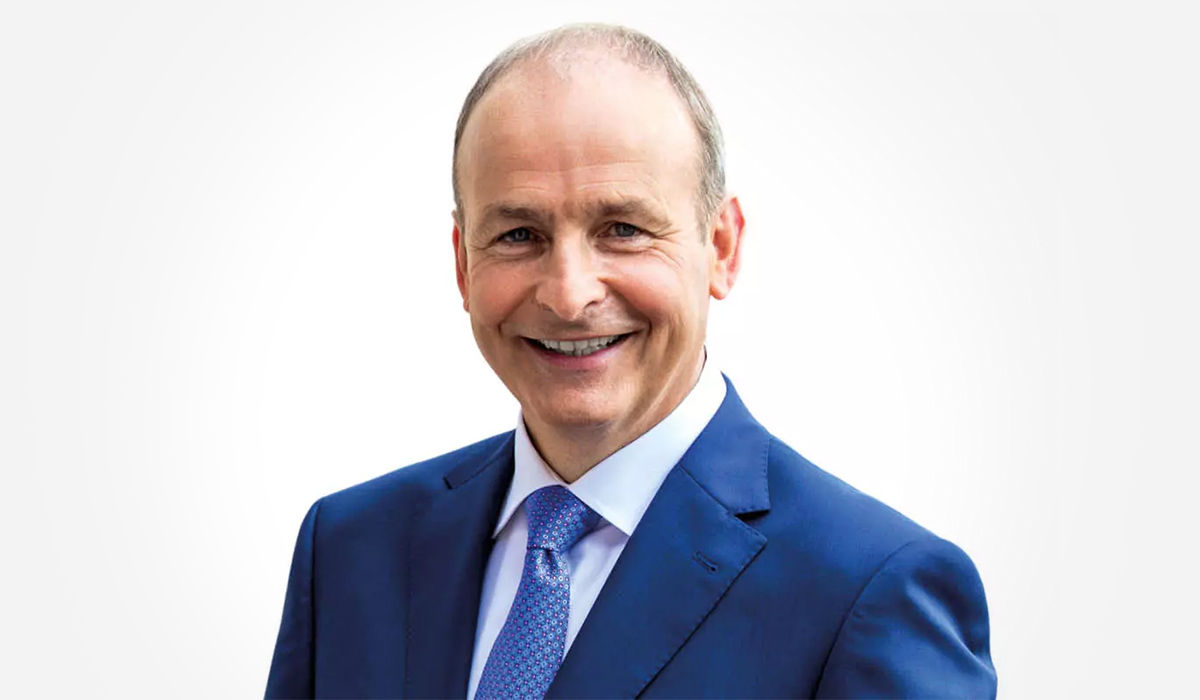
19 Jun Interview with Taoiseach, Micheál Martin
Ireland has recorded remarkable economic growth over the past decade, with GDP expanding by almost 5% in 2025. The country is now advancing its National Development Plan 2026–2035, a long-term roadmap focused on housing, water and energy infrastructure, roads and public transport. To begin, could you give L.A. Times readers some of the highlights of Ireland’s economic growth lately, what have been the key factors behind the country’s recent economic dynamism?
First, sustained investment in education. Free secondary education in the 1960s, followed by very high participation in third-level education, has produced some of the strongest completion rates in Europe and significantly reduced early school leaving. Today, Ireland also has one of the highest tertiary education participation rates in Europe. This skills base is a major driver in attracting international companies.
Second, E.U. membership has been transformative. When Ireland joined, it was among the poorest countries in Europe. Cohesion funding and access to the Single Market opened up major economic opportunities and shifted Ireland from an inward-looking to an outward-looking economy. Alongside this, a flexible labor market and access to the wider E.U. workforce have been crucial. Companies value Ireland not only for its tax environment, but increasingly for the availability of skilled talent drawn from across Europe.
Ireland’s appeal also lies in quality of life: it is a peaceful country with a mild climate and a strong environment for raising families and working. That helps attract international companies and talent. Firms such as Apple, Microsoft and Qualcomm, along with many other U.S. and Californian companies, have expanded significantly here, driven by access to skills and a welcoming environment. The same is true in life sciences, where companies like Medtronic and Boston Scientific have used Ireland as a base to access the European Single Market and build major success across Europe.
Ireland’s medtech sector is particularly strong, especially in the Galway region, which is now one of the leading medtech clusters in Europe. More broadly, while Europe is often seen as highly regulated, U.S. technology companies have still achieved exceptional growth here. Ireland benefits from being a gateway to the E.U. market, combined with a deep talent pool drawn from across Europe.
During COVID-19, several U.S. companies told us that their plants in Ireland — particularly in places like Galway — were the only sites globally that never lost a day of production. That was possible because we worked with employers and workers to keep essential industries operating safely. It strengthened confidence in Ireland as a reliable base for investment.
Ireland continues to adapt in a changing world. Our population has grown significantly and is now approaching pre-Famine levels, for the first time since the mid-19th century. After decades of decline and stagnation, growth resumed from the 1970s, accelerated through the 1990s, and increased further with E.U. enlargement in 2004, when many people from countries such as Poland, Lithuania and Latvia came to live and work here. Taken together, these changes reflect a more dynamic and diverse Ireland, which is a positive development in historical terms.
There was conflict in Northern Ireland for around 30 years, from the late-1960s to the early-1990s. We underestimated its negative impact on economic development, tourism and investment. The peace process, one of the more successful in the world, has since delivered a major but often overlooked economic benefit, improving confidence and stability across the island.
Ireland’s success has also been driven by a flexible labor market and a strong focus on education. In 2020, a dedicated Department of Further and Higher Education, Research, Innovation and Science was established to prioritize skills, third-level education and research. Recent initiatives, including a major national research program and enhanced R&D tax credits, continue to support both multinational and indigenous firms.
At the same time, we are addressing infrastructure constraints linked to rapid population growth. The National Development Plan includes major investment in the electricity grid, water services and public transport, including projects such as the Dublin Metro. We are also reforming planning and permitting processes so critical infrastructure can be delivered more quickly and efficiently.
Offshore wind is a key area of focus for Ireland. We have already invested heavily in renewables — earlier this year, around 50% of electricity generation came from onshore wind and solar, mainly wind. The next major step is offshore wind. Projects have been auctioned and developers selected, and they are now moving through planning, supply chain and delivery stages, which are complex but progressing.
From the 2030s, we expect the first offshore wind farms to come online. Combined with potential hydrogen development, this could significantly transform Ireland’s energy system, increase renewable penetration and reduce dependence on imported fossil fuels.
Within the National Development Plan 2026–2035, what role do public-private partnerships (PPPs) play, and how is the government fostering collaboration between multinational investors, local enterprises, universities and research centers to sustain Ireland’s economic model?
Ireland has had strong experience with PPPs over recent years, with different models used across infrastructure delivery. In some cases, private consortia bid for projects such as schools, build them and operate them under long-term contracts before returning them to the State. We now have a well-developed framework for PPPs, and they will continue to play a role alongside traditional public procurement, especially in major infrastructure investment.
In research and education, we also work closely with industry through clusters that bring together SMEs, multinationals, universities and the State. A strong example is the National Institute for Bioprocessing Research and Training (NIBRT), which focuses on skills for the biopharmaceutical sector. It is developed in partnership with industry, with around 40–50 companies helping to shape training so it matches real workforce needs from technical levels through to PhD.
More broadly, companies are actively involved in skills development, from digital training to engagement in schools, helping to encourage students into technology and life sciences. This reflects a very open approach in Ireland to collaboration between education and industry at all levels.
Ireland’s $50 billion digital industry is now one of the core pillars of the national economy, with Technology Ireland estimating that the sector accounts for 13% of GDP. Major U.S. multinationals such as Apple, Google, IBM, Intel, Meta and Microsoft are among the 1,000 digital companies operating in Ireland. For readers less familiar with Ireland’s technology story, how has the country’s focus on digital industries helped put it on the global map, and which successes best illustrate this transformation?
Google has been a strong partner to the Irish state, supporting digital literacy initiatives in local communities and offering scholarship programs that help students from disadvantaged backgrounds access higher education. Apple is another major success story, employing around 6,000 people in Cork. Its growth reflects confidence in Ireland as a base for serving both European and wider international markets.
Like other major tech companies — including Google, Microsoft, Amazon and LinkedIn — it has benefited from access to a highly skilled, international workforce and Ireland’s position within the European labor market. A key strength is the availability of talent, supported by flexible work permit arrangements and close cooperation between companies, the state and the Industrial Development Authority (IDA).
Where specialist skills are needed, approvals can be fast-tracked. More broadly, Ireland’s “one-stop shop” approach is often highlighted by investors. Companies consistently point to a responsive system — across government, local authorities and the IDA — that focuses on solving problems and facilitating investment rather than adding bureaucracy.
What is the significance of Ireland hosting the International AI Summit in October, and how is the country positioning itself as a leading voice on sustainable and responsible next-generation technologies such as AI?
Ireland’s E.U. Presidency from July will focus strongly on competitiveness. We support the European Commission’s roadmap, including the “28th regime” to help SMEs scale more easily, and broader efforts such as the Savings and Investment and Capital Markets Unions to strengthen European growth.
A major theme in Europe is artificial intelligence (AI) and how to close the gap with the U.S. and China. There is an ongoing shift in the debate from regulation towards innovation, including discussions at recent European AI summits. Ireland is well positioned in this space. The International Monetary Fund (IMF) has noted our strong AI skills base per capita, and we have published a national AI strategy focused on AI literacy for citizens and adoption by SMEs.
Major tech companies are also supporting this ecosystem. At the same time, we are addressing the responsible use of AI, particularly its impact on employment. While technological change can displace some jobs, it also creates new ones, and the challenge is to prepare for and capture those opportunities.
Energy is a critical part of this picture. AI will significantly increase electricity demand, making offshore wind development essential. Alongside growing solar adoption and a wider decarbonization agenda, Ireland is working to ensure its energy system can support future digital growth.
Ireland has emerged as a leader in green energy through strong wind-power integration, ambitious renewable targets, and a policy framework that supports sustainable innovation. In September 2025, renewables supplied 42% of electricity generation, with wind alone accounting for 34%. What opportunities for deeper cooperation exist with innovation hubs such as California in areas like clean tech, sustainable finance and next-gen energy solutions?
There are significant opportunities for synergy in Ireland. We have a strong base of Irish SMEs working with major global firms like Amazon, particularly in areas such as data centers and specialist engineering. I recently saw this in practice in Virginia, where Irish companies are partnering with Amazon on data center development.
State agencies such as Enterprise Ireland play a key role in supporting these firms to grow and scale, especially in technology and life sciences. Many of them develop innovative solutions that are then adopted by multinationals, through partnerships or acquisition.
Ireland is also strong in research and innovation. At centers like the Tyndall National Institute, advanced work is underway on reducing the energy demands of data centers, often leading to new spin-out companies. Overall, it is a very dynamic ecosystem where solution-driven collaboration benefits both Irish firms and global partners.
Ireland is placing innovation and talent at the center of its next growth phase. The 2026 budget allocates $140 million to support high-potential Irish companies, particularly in emerging technologies, while $15.2 billion has been directed toward education and sustainable career pathways. How is Ireland aligning its education system with the skills required for future industries, and what role will this play in sustaining long-term economic growth?
We want to position the entire education system for AI, from primary through to higher education, with the right balance in how it is introduced. However, the core of education will always remain the relationship between teacher and student. Human interaction, guidance and mentoring are essential and will continue to be at the center of learning.
At secondary level, AI is already raising questions about assessment and tools like ChatGPT, but our national curriculum has provided strong standards and helped Ireland remain among the top performers internationally in literacy and numeracy. We are now investing further to make schools and universities AI-ready. Rather than seeing AI as a problem, the focus should be on how students can use it responsibly to enhance learning and improve educational outcomes.
How does Ireland stand out in its support for entrepreneurship and SMEs, and what recent initiatives are helping startups launch, scale and compete internationally?
We support export-oriented SMEs mainly through Enterprise Ireland, which provides funding for R&D, innovation vouchers for small firms, and other targeted supports to help them find solutions and bring products to market. Enterprise Ireland also has 30–40 offices worldwide, helping Irish companies enter new markets, avoid common mistakes, and connect quickly with local expertise.
In many cases, established companies abroad also mentor Irish SMEs by sharing market knowledge and guidance. The relationship is very much two-way. While U.S. multinationals are well known in Ireland, Irish companies are also major investors abroad, supporting around 200,000 jobs in the U.S.
Ireland is among the top foreign investors in the U.S., with significant activity in California in particular. In turn, U.S. companies support tens of thousands of jobs in Ireland. There is also a strong ecosystem of Irish-founded companies in the U.S. tech sector, including firms such as Stripe and Intercom. Overall, this reflects a mutually beneficial, open-trade relationship that works well for both sides.
Ireland and the U.S. share deep economic, cultural, and investment ties, with 2.3 million people in California alone claiming Irish descent. You recently met President Trump during your annual Saint Patrick’s Day visit to Washington D.C. What is Ireland’s long-term vision for strengthening economic ties with California and the wider U.S., and how did your recent Washington D.C. visit build on this already strong partnership?
The St. Patrick’s Day visit to the White House and Capitol Hill was a very positive engagement. It brings together meetings with investors, companies operating in Ireland, and the wider Irish-American community across the U.S. Over 30 million Americans claim Irish ancestry, and the week is widely seen as an important moment to recognize that diaspora and their contribution to the U.S.
President Trump, like other presidents before him, acknowledged this connection. I highlighted the depth of Irish-American history, which includes figures of Irish descent among U.S. presidents, signatories of the Declaration of Independence, and key contributors such as Irish architect James Hoban, who designed the White House, and Charles Thomson, who designed the Great Seal of the U.S.
The term “United States of America” is also linked to Irish-born figures in early American history, including Stephen Moylan. Beyond history, the relationship is deeply cultural and personal, as well as economic. Irish and American communities remain closely connected, including through literature and migration stories. Successive U.S. presidents have also played a constructive role in supporting peace in Ireland. Overall, the visit reflects a long-standing and warm relationship, and a moment to acknowledge and thank the U.S. for its continued engagement with Ireland.
As Ireland prepares to chair the Council of the E.U, how does it plan to balance its commitment to open transatlantic trade with Europe’s growing focus on strategic autonomy, economic security and resilient supply chains?
A key priority is strengthening the central relationship between Europe and the U.S. While it has faced periodic strain, it remains one of the most important economic relationships in the world and must be actively maintained.
U.S. and European companies are deeply integrated, selling significant goods and services into each other’s markets. Modern supply chains are highly interconnected, as seen during COVID-19 when even a single vaccine involved components produced across multiple countries. This interdependence underlines how closely linked our economies are.
From Ireland’s perspective, we want to use our E.U. Presidency to reinforce and stabilize this relationship. At the same time, Europe is focused on improving competitiveness—simplifying regulation, advancing a Capital Markets Union and an Energy Union, and making it easier to do business. These priorities are widely supported by industry and are essential for growth.
U.S. investment remains critical to Ireland’s economy, driving employment, exports, tax revenues, and innovation. Around 970 U.S. subsidiaries operate in Ireland. In return, Ireland has become the fifth-largest source of foreign direct investment in the U.S. What incentives make Ireland an attractive European base for U.S. investors in 2026, including its tax environment, skilled workforce and access to the E.U. market?
Ireland has a competitive corporate tax rate of 12.5%, recently adjusted to around 15% in line with international agreements. We also have a highly skilled workforce, strong access to the wider European labor market, and an efficient work permit system that helps companies bring in the talent they need.
Our labor market is flexible, and we are responsive in working with businesses. Ireland also has strong fiscal stability and a generally mild climate, with fewer extremes than many other parts of Europe. In addition, we maintain strong relationships with the U.K., the E.U. and the U.S. Overall, Ireland is well placed as a stable, open and attractive location for investment.
How is Ireland working to expand its own economic footprint in the U.S., particularly through investment, business partnerships and innovation-led collaboration?
There are now a large number of Irish companies operating in the U.S. Many expand into the U.S. early in their growth journey — sometimes even before entering wider European markets — because it offers scale, opportunity and access to venture capital.
Major Irish firms such as Smurfit Westrock, Kerry Group, Glanbia and CRH have built a strong presence in the U.S., alongside a wide range of SMEs in technology and engineering. Ireland also has a major footprint in aviation leasing, and companies like Ryanair are significant purchasers of aircraft. Overall, Irish business links with the U.S. are deep and growing, spanning large multinationals, financial services and fast-growing tech firms.
What is your final message to L.A. Times readers?
We greatly admire California’s creativity and its global impact on technology and innovation. Ireland has benefited from that ecosystem and continues to learn from it, while also investing in our own research, development and innovation.
Rather than envy, the focus is on building capability at home. We recognize the importance of sustained investment and ambition, and the lesson that no company or economy can stand still for long.
It is always striking to see how companies like Google and Apple grew from early-stage firms into global leaders by continuously innovating. That link between research, industry and real-world application is particularly important, because it is ultimately about using innovation to improve lives.
No Comments